Major warehouse expansion to support the needs of Nunavik communities
To address the growing needs and logistical challenges of the North, the Fédération des coopératives du Nouveau-Québec (FCNQ) has undertaken a significant expansion of its refrigerated warehouse.
Based in Montreal, the FCNQ has been a vital part of the of economic and social fabric of Nunavik for over 50 years. Comprising 14 Inuit cooperatives, the FCNQ was founded in 1959 as the first cooperative to oversee essential services, including retail stores, banking services, post offices, cable television, a travel agency, tourist hotel accommodation, and support for Inuit art. This cooperative structure strengthens the governance capacity of Indigenous communities, allowing them to take charge of their priorities and resources.
Within this context of development and autonomy, the project to expand the refrigerated warehouse in Baie-d'Urfé, Montreal, was launched. The expansion adds 1,580 meters squared of refrigerated and frozen space, 6,500 meters squared of conventional storage, and 1,670 meters squared of office and common-use areas, providing reliable and sustainable infrastructure to support Nunavik's growth.

Thanks to the work carried out by the FCNQ Construction subsidiary, the FCNQ will be able to store more goods and materials for cooperative store orders, as well as essential foods such as fresh fruits and vegetables.
Sokchiveneath Taing Chhoan, Senior Director of Socioeconomic Development at FCNQ, explained, "This expansion gives us the ability to buy in bulk, take advantage of economies of scale, and ensure greater price stability for our members," emphasizing the direct impact on the purchasing power of Inuit families.
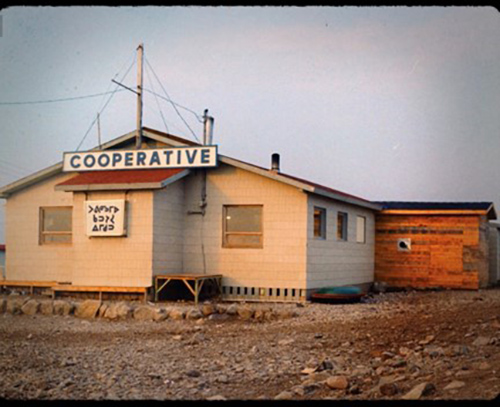
Photo credit: Fédération des coopératives du Nouveau-Québec
The benefits of this expansion go far beyond cost reduction. By increasing storage capacity, the FCNQ is diversifying its product offerings and working to reduce the risk of stockouts, a crucial issue in villages where deliveries depend on weather conditions.
Additionally, the FCNQ operates 10 subsidiaries in various sectors, including mining transportation, mechanics, renewable energy, maritime transportation, construction, and Inuit art. This model enables the internalization of services, creation of local jobs, and development of strategic partnerships with other Inuit and Indigenous organizations to manage specific services for Nunavik communities. Each project strengthens the economic prosperity of Inuit communities while decreasing their reliance on southern cities and businesses. With over 1,400 employees, of whom 950 are Inuit, the FCNQ stands as the second-largest employer in the region, following the Kativik government. The Fédération invests in training and skills development, helping to build a strong, resilient economy rooted in the values and vision of local communities.
The FCNQ's warehouse expansion project received support from Indigenous Services Canada through the Community Opportunity Readiness Program.
To learn more: