Kebaowek First Nation Sugar Bush Project: A long-awaited achievement
Kebaowek First Nation is approaching the launch of its long planned sugar bush project, now in its final stages of construction and on track for production in 2026-2027.
The project marks a milestone for the community by promoting economic self determination, reinforcing cultural revitalization and creating stable employment in a region historically reliant on seasonal forestry work. It allows Kebaowek to participate meaningfully in Quebec's thriving maple syrup industry while strengthening the community's long-term resilience.
"Diversifying our economy is essential; this project gives us stability while creating something our community can be proud of," said Justin Roy, Director of Economic Development for Kebaowek.
The idea of a community managed sugar bush was identified as a priority more than a decade ago. The project really took off in 2018, when Kebaowek First Nation began working with the Québec Maple Syrup Producers to secure the production quota required to operate.
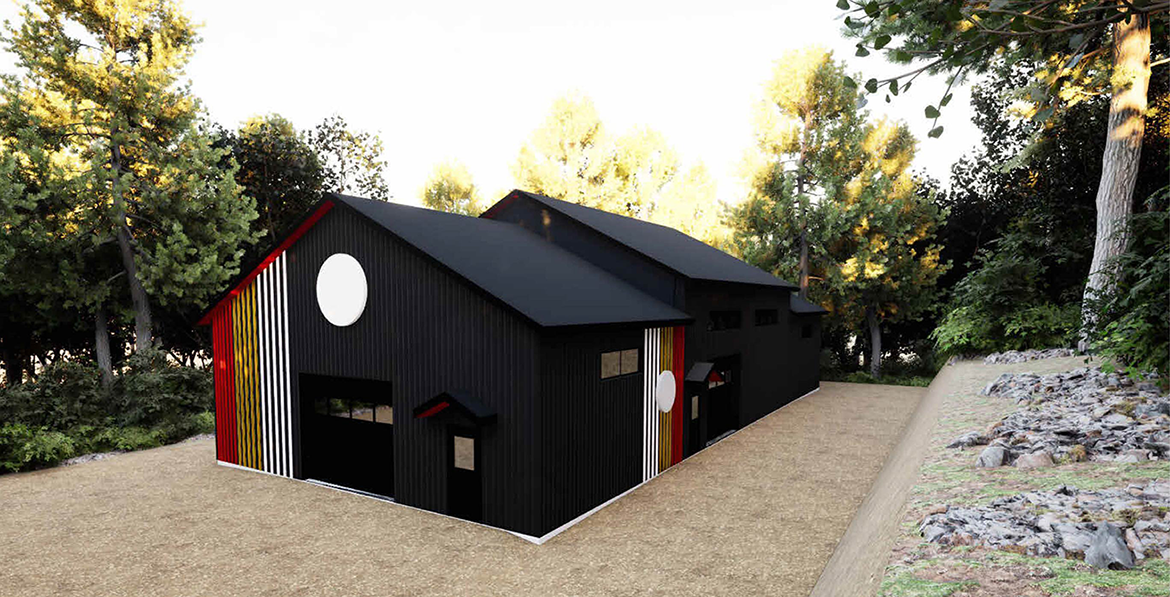
Photo credit to Archim Architecture and Kebaowek First Nation.
Even before the launch of the first production season, the project is already yielding tangible benefits:
- Two workers have completed full-time, hands-on training at a nearby sugar bush.
- The construction work has stimulated the local economy and engaged community members, particularly those in the forestry sector, who have found seasonal employment in construction, material handling, and site preparation.
The implementation of the project required major preparatory work, including a 2-kilometre access road and new electrical infrastructure. Despite delays from winter weather and regulatory challenges, construction is on track. Already anticipating future expansion, the sugar bush will initially tap 8,600 maple trees. Kebaowek First Nation plans to market its syrup through retail stores, public markets, and distribution channels of the Quebec Maple Syrup Producers.
The operation will showcase community traditions, from using a wood-burning stove rather than relying solely on osmosis technology to offering traditional maple-making demonstrations, community events, trails, and tourism activities. As project coordinator Kayla Lafrance shared, "My family still boils maple sap with a wood‑burning stove, and so does a colleague's family. That's how we've always done it here. The smoke from real fire creates a richer, better-tasting maple syrup."
Indigenous Services Canada is proud to support Kebaowek through the Community Development Wrap-Around Initiative, the Community Opportunity Readiness Program, and the Rooted in Forests Initiative, a Strategic Partnerships Initiative. These investments have helped sustain project progress despite rising construction costs, diversify the community's economic opportunities, and support the development of a local workforce.